‏إظهار الرسائل ذات التسميات ;Scanner;1Password;Password;Log ;Account ;Fingerprint ;Instagram’s New Hyperlapse App Now Supports High-Speed Selfies;Memories;Map ;Tourist ;YTakes ;ou ;Try ;Findery;Apple ;History;Flubs ;Famous;. إظهار كافة الرسائل

Some Report Sluggish WiFi, Shorter Battery Life on Apple’s New iOS 8

| |
Some Report Sluggish WiFi, Shorter Battery Life on Apple’s New iOS 8
Apple’s iOS 8 appears to be dogging certain users with buggy WiFi and poor battery life, among other glitches.
As noted by blog site Tech 2 on Monday, some users chiming in on Apple’s support forum are reporting WiFi-related problems, specifically performance issues and connectivity failures.
One user said that the WiFi speed keeps dropping on an iPad Air, iPad mini with Retina display, and iPhone 5s after upgrading to Apple’s latest mobile operating system. Another person said the WiFi connection seems to be intermittent on iOS devices, and a third complained that since the iOS 8 update, WiFi will start to work and then slow to a crawl.
Another user grappled over the issue with Apple support and reported the following results:
Chatted with Apple support and they had me do a restore and set up as new. I did that since I’m seeing other glitches in iOS 8. It seemed to work after that, but I only tested for a few minutes and didn’t do the ping test (which I should have done, as that would have given me a definitive answer). I then restored my backup and the issues returned. Apple support implied if restoring as new didn’t fix the problem, then it’s a hardware problem. Considering the number of reports about this, he can’t be correct.”
The familiar battery drain issue also seems to have reared its ugly head with some iOS 8 users. In another Apple support forum thread, one person said the battery drains from 100 percent to zero in around four hours with minimal usage. Another user reported that since the iOS 8 upgrade, the battery drains incredibly fast on his iPhone 5 and his wife’s model as well.
So far, the battery drain issue is taking up only a single page in Apple’s support forum, so it’s difficult to tell how common or widespread the problem may be. Battery drain is a frequently reported issue following each new version of iOS, but there are steps users can take to preserve battery life. As one example, in iOS 8, you can now identify which specific apps are hogging your battery life the most and either reduce your time on the battery-sucker or just rid yourself of the app entirely.
Another issue cited by Tech 2 is sheer performance. As discussed in a MacRumors support forum, some users of older devices say performance is slower after upgrading to iOS 8. In particular, Safari seems to load pages more slowly, at least for a couple of people sharing their feedback on the forum.
Reports of technical issues are par for the course whenever Apple upgrades its mobile OS. In lieu of simpler and more specific fixes, one suggested solution is to reset your settings back to their default values to see if the problem clears up. The next step usually involves resetting your entire device back to factory settings (make sure to back up all your content in iTunes first) and then restoring it from your backup.
If the problems persist, then a call to Apple support or a visit to your local Genius bar is your next best bet. If the issue is widespread enough, then Apple will usually investigate and issue a fix if necessary. We’ll have to see if the issues reported so far prove problematic enough for Apple to step in.
CNET contacted Apple for comment and will update the story with any further information.

أكمل القراءة Résuméabuiyad

How to Use 1Password, an App That Lets You Log In to Any Account with Your iPhone’s Fingerprint Scanner

| |
How to Use 1Password, an App That Lets You Log In to Any Account with Your iPhone’s Fingerprint Scanner
(Thinkstock)
One of the most unsung features of iOS 8 is right underneath your finger.
Apple’s new mobile operating system lets third-party apps access the Touch ID (fingerprint) feature in the iPhone 5s, iPhone 6, and iPhone 6 Plus. So now, with the free iOS app 1Password and a bit of preparation, you can log in to an online account with just a quick scan of your fingerprint.
At least in theory. Though 1Password represents the holy grail for many people — the ability to both keep your passwords secure in an encrypted vault and bypass annoying log-ins by simply holding a finger on the home button — it’s not nearly as seamless as anyone would like it to be.
That’s because the 1Password app is currently compatible with very few mainstream apps. So few, in fact, that I can list them here: Etsy, TweetBot, and VSCO Cam (those, and a few indie ones).
We hope that, as 1Password attracts more fans, the developers of popular apps will make their products work with it. In the meantime, you can use 1Password to speed through logins on websites when you’re using your Safari browser. (1Password is also available as an app and a browser plugin for Mac, Windows, and Android.)
Before you take the dive, it’s important to understand the security implications of 1Password. The service doesn’t actually make sites like Amazon and Facebook lockable by fingerprint. Rather, 1Password uses your fingerprint to unlock its own vault, which holds your passwords to those other services. That means that you must use a super-secure password to secure your vault, and that you must continue to use complex and unique passwords for each individual service. Otherwise, your accounts remain susceptible to being hacked the old-fashioned way.
And keep in mind that the trade-off to security is convenience. Even with 1Password, each login takes about five taps on your phone. That’s probably less effort than manually typing in a password, but it’s still a drag. Albeit a very necessary drag.
Here’s how to use 1Password on your iPhone:
1. Download the iOS 8 app here.
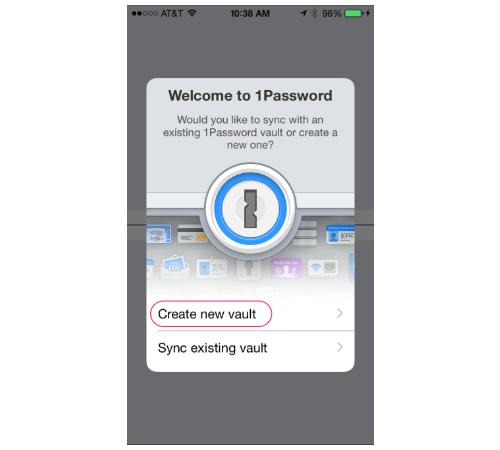
2. When you open the app, it’ll ask you whether you’d like to sync with an existing 1Password account or start a new one. If you’re new to this app, select the latter. Tap Create new vault.
1Password welcome screen
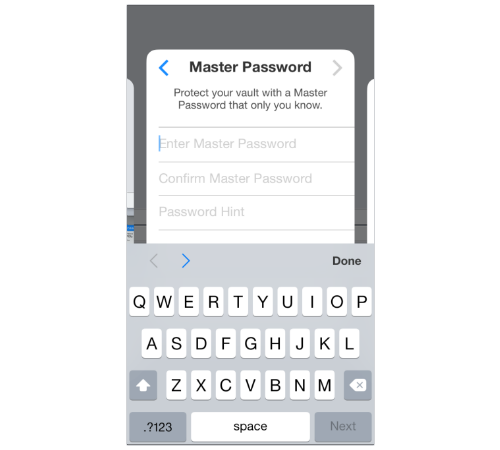
3. You’ll then be prompted to enter a Master Password, which is the one phrase that you’ll need to access all the other passwords you store. I know, I know: You’re probably already feeling password fatigue. But make a real effort here: Make it complex, long, and unique. Treat this one as the most important password you’ll have, because it will hold the key to all your other passwords. I’d recommend that you create a string of lower- and uppercase characters with a few symbols and numbers mixed in. Please don’t make it one of these.
1Password Master Password screen
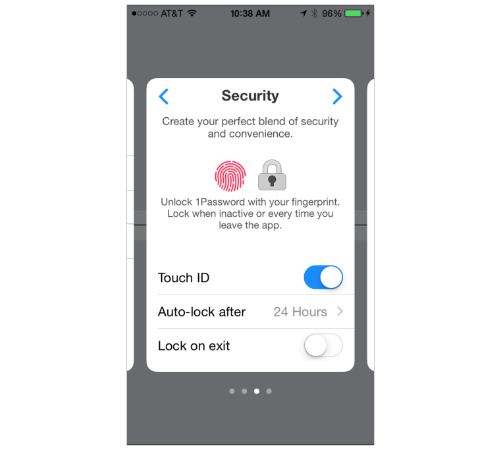
4. Here’s the exciting part! You can enable your iPhone’s fingerprint scanner to unlock 1Password whenever you open the app. This way you don’t have to type in that super-difficult password you created just a few seconds ago every time you want to log in to something.
1Password Security screen
You can always adjust or expand these settings by heading to the app’s Settings section and navigating to Security  Touch ID.
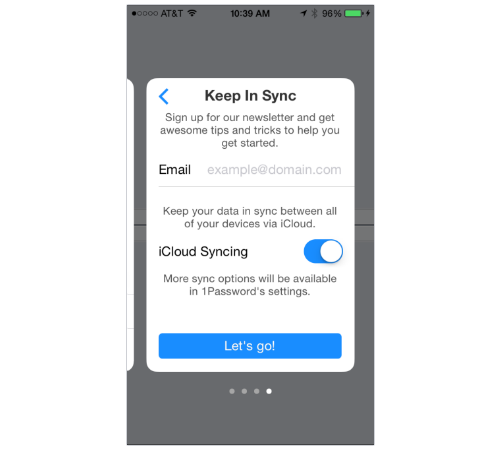
5. Next comes a prompt to sign up for 1Password’s newsletter, but that’s not necessary. You’ll also be given a choice of whether you’d like to sync your data via iCloud (this may take a few seconds). If you use Dropbox or another cloud storage service, skip this step. You can always add those accounts later. When you’re ready to begin, tap Let’s go! (1Password’s exclamation point, not mine).
1Password Keep In Sync screen
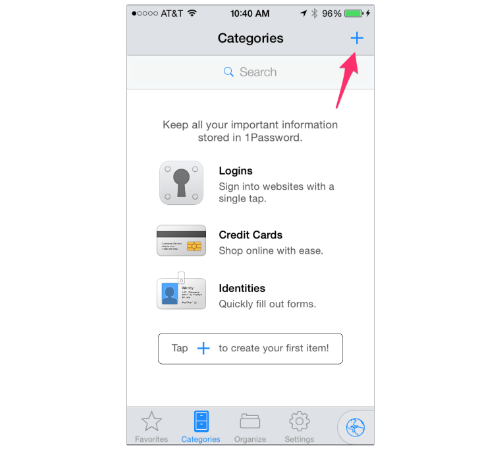
6. You’ll be brought to a Categories page. This is where you’ll be able to create and organize your many digital accounts, credit card information, and form fodder. To create your first one, tap the + button in the upper-right corner of the screen.
1Password Categories screen
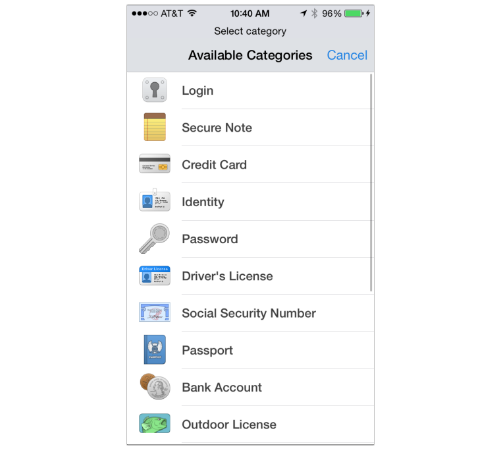
7. Whenever you want to enter a new piece of information into the vault, you must first categorize it. I’m guessing you’ll be using this tool primarily for log-ins, so let’s start there. Tap Login.
1Password Available Categories screen
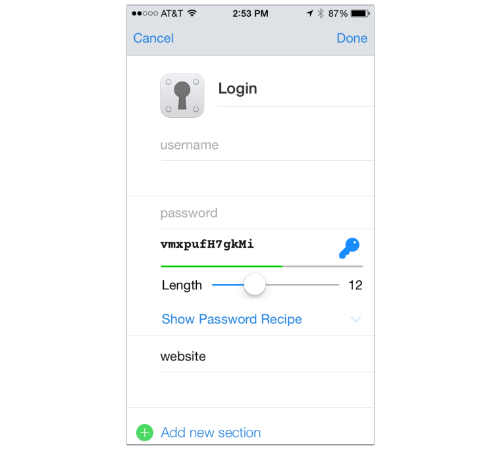
8. You’ll be asked to name the account and type in your username. Below that, there’ll be an auto-generated password.
1Password log-in
The idea here being that if this is a brand-new account, you can automatically use this ultra-strong password to access it. Chances are, however, that you’ve already established log-in information for sites like Facebook and Amazon. It might be safer to change your password to a random string of letters and numbers, but that involves actually logging into the website in question and resetting that info. If you’d rather not do that right now, simply delete that section and type in your password for that service.
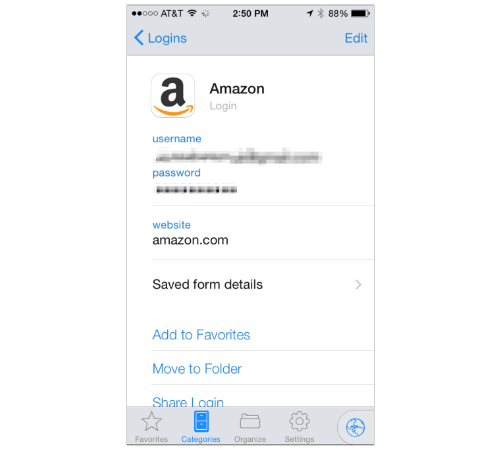
Below that, you’ll see a place to enter the name of the site this log-in works for. You can type something like “Amazon.com,” and 1Password will automatically generate the company’s symbol in the log-in profile.
1Password Amazon log-in
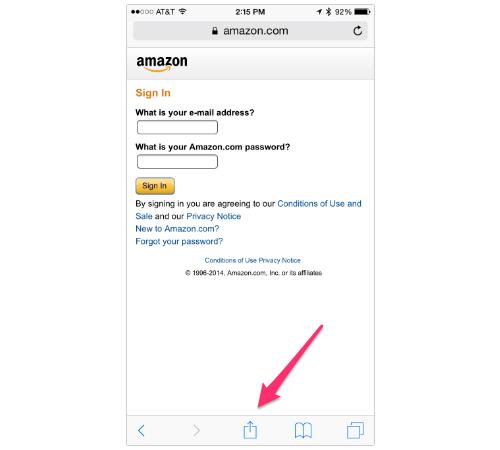
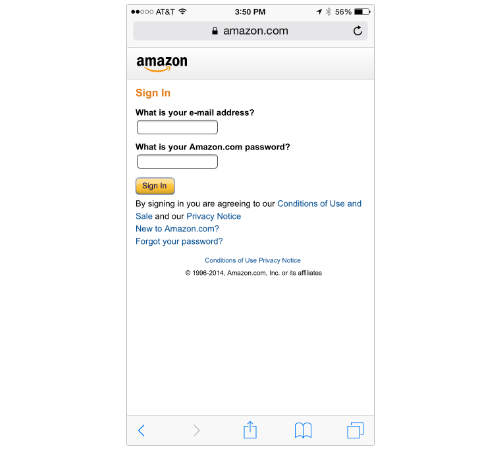
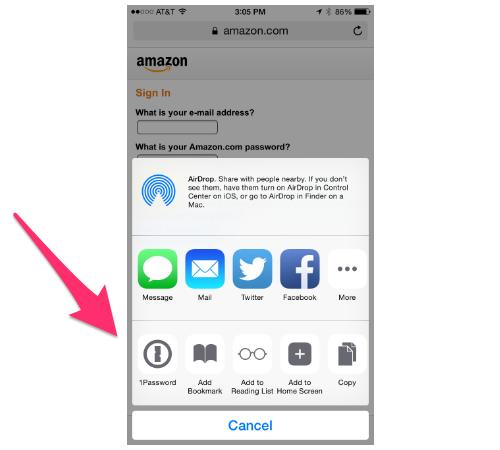
Don’t celebrate just yet — you’re far from done. Next up, you’ll need to open up Safari and tap the Share button at the bottom of the screen.
Amazon sign-in screen
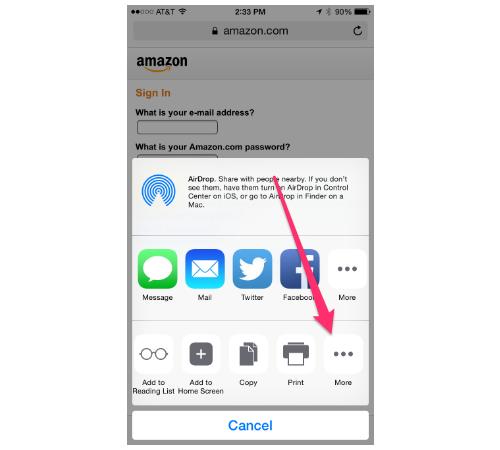
Swipe left over the lowest tier of icons all in gray until you see the More icon. Tap it.
iPhone 6 AirDrop sharing screen
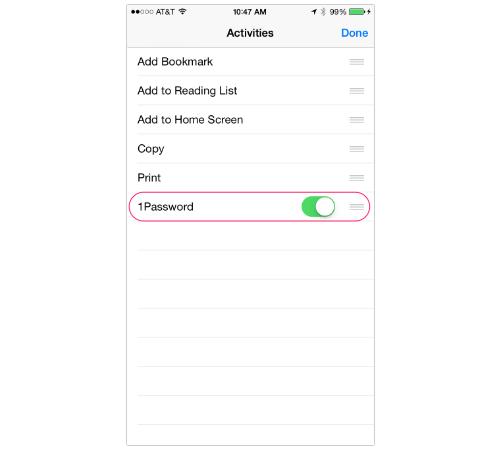
10. You’ll see a page titled Activities. At the very bottom of it, there’ll be an option to enable 1Password.
iPhone 6 Activities screen
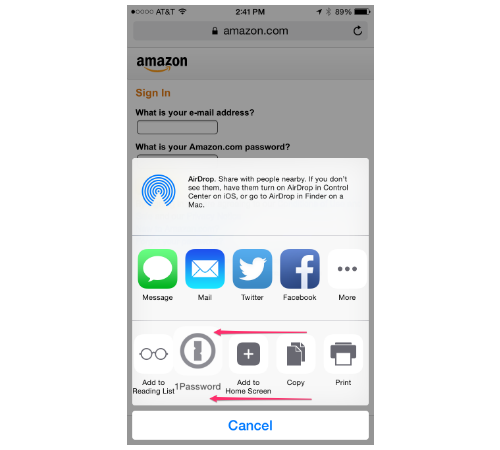
11. When you’re done, go back to the share options. The 1Password icon should now show up in your choices. If you don’t want it to be so hidden, then simply hold your finger on the app icon and drag it to the left.
iPhone 6 AirDrop sharing screen
Phew; now you’ll never have to do that again. Good riddance.
12. It’s time to go to a website you’d like to log in to. For this to work, you have to have first created a log-in profile for this site within the app, obviously.
Amazon sign-in screen
Tap the Share button and select the 1Password icon.
iPhone 6 AirDrop sharing screen
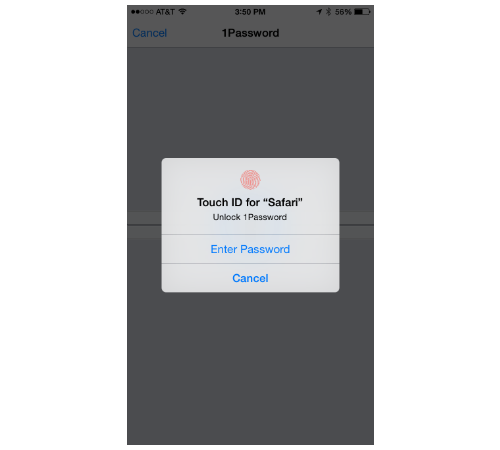
The 1Password vault will show up. At this point, you can either enter your master password or hold your finger down on the home button for Touch ID.
iPhone 6 Touch ID screen
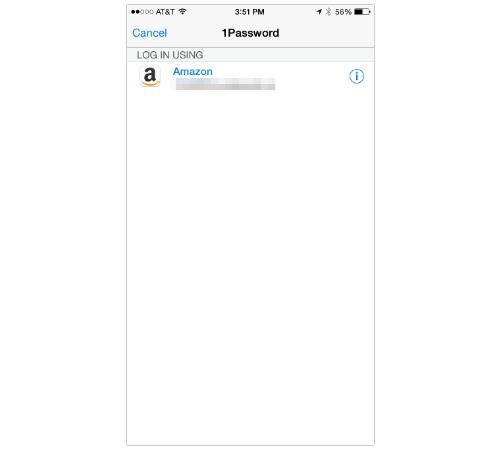
13. 1Password will automatically analyze what website you’re on and generate the best log-in option. In this case, it automatically recognizes Amazon. Tap the name.
Logging into Amazon with 1Password
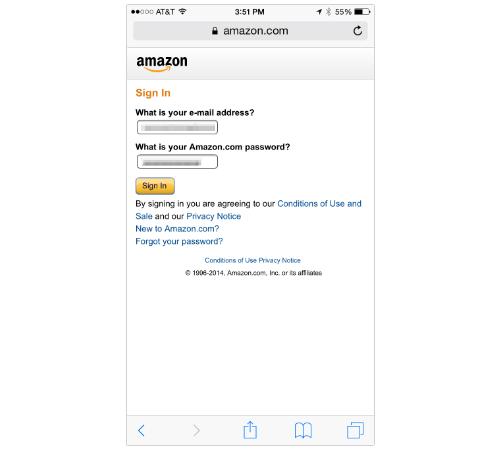
14. Your login information will load, and then you’ll have to tap whatever Sign In button the site provides.
Amazon sign-in screen
And now you’re done. Well, sort of. You’ll need to create profiles for every other log-in or credit card you feel like having on hand. Needless to say, this is a project you might have to set aside some time for (or, for the advanced user, you can synchronize your mobile version of 1Password with the copy running on your Mac or PC).
It takes a while, but in the long run it’ll be worth it.
أكمل القراءة Résuméabuiyad

جميع الحقوق محفوظة ©2013